
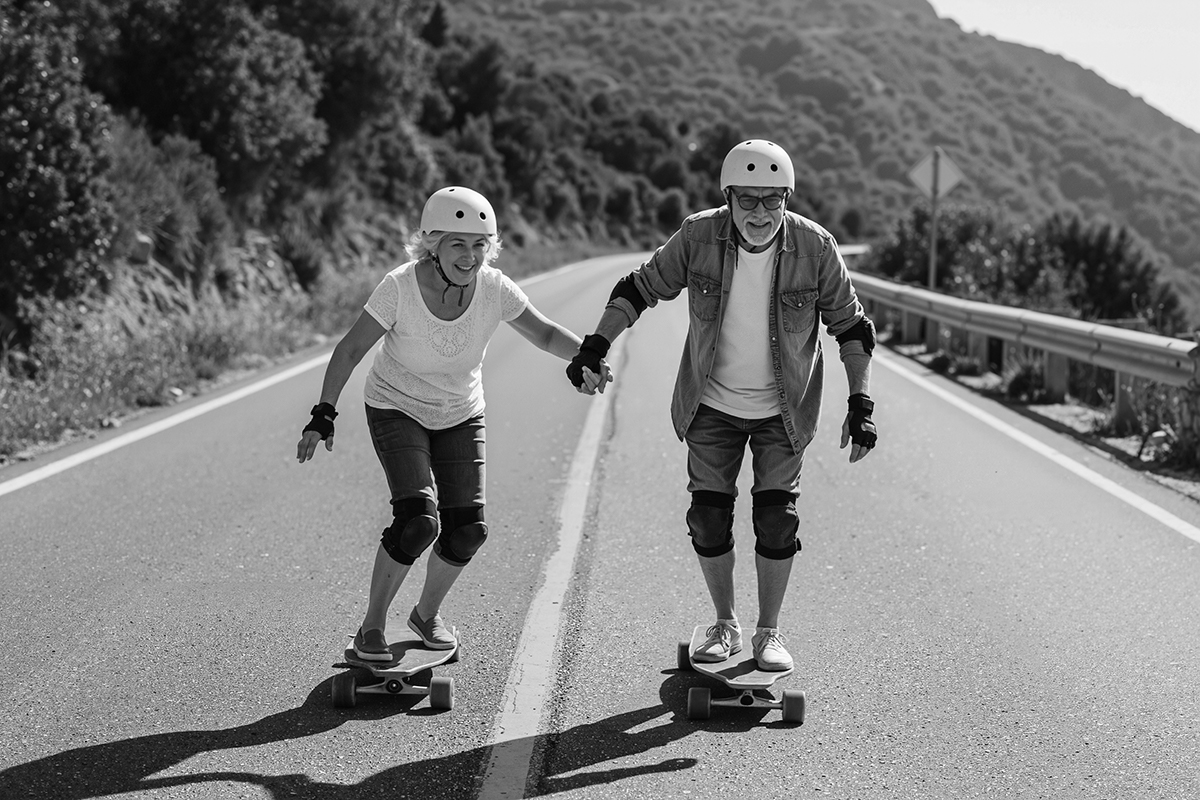
If you’ve ever found yourself asking, “Am I too old to learn how to skateboard?”, you’re certainly not alone.
Maybe you’re in your 30s and wish you had started skating as a teenager. Perhaps you’re in your 40s or 50s and looking for a new hobby that gets you outdoors and keeps you active. Or maybe you’ve watched your kids, grandkids, or even videos online and thought, “I’ve always wanted to try that—but I think I’m too old now.”
Here’s the good news:
You’re probably not too old.
One of the biggest misconceptions about skateboarding is that it’s a sport reserved for teenagers. While it’s true that many people first step on a skateboard at a young age, thousands of adults discover skateboarding later in life. Every day, people in their 30s, 40s, 50s, and even their 60s decide to buy their first skateboard, learn the basics, and experience the fun and freedom that comes with riding.
In fact, one of the most common questions asked in online skateboarding communities isn’t about tricks or equipment—it’s whether someone is simply too old to start. The overwhelming response from experienced skateboarders is almost always the same:
“No. Just start.”
That doesn’t mean learning as an adult is exactly the same as learning when you’re twelve years old. Adults often have careers, families, busy schedules, and responsibilities that leave less time for practice. We also tend to think more about the possibility of falling or getting injured. Those concerns are completely normal, and they deserve honest answers.
The good news is that adults also have several advantages.
We’re generally more patient. We tend to make smarter decisions, set realistic goals, and understand that learning a new skill doesn’t happen overnight. Instead of trying to impress our friends by attempting difficult tricks on day one, we’re often happy simply cruising down a smooth path, improving our balance, getting some exercise, and enjoying the process.
And that’s exactly what skateboarding should be about.
Whether your goal is to ride around your neighborhood, explore local bike paths, learn a few beginner tricks, improve your fitness, or simply check something off your bucket list, skateboarding offers an opportunity to challenge yourself in a way that’s both fun and rewarding.
One of the things I love most about skateboarding is that there’s no finish line. You don’t have to become a professional skateboarder or land kickflips to enjoy it. Every session brings small victories—your first confident push, your first smooth turn, your first ride around the block—and those moments are what keep people coming back.
Throughout this guide, we’ll answer some of the most common questions adult beginners ask, including whether 30 is too old to start skateboarding, 40 is too old to learn, or 50 is simply too late. We’ll also discuss why so many adults are discovering skateboarding later in life, how to get started safely, and why age may be far less important than you think.
If you’re looking for a complete step-by-step guide on getting started, be sure to read our How to Learn to Skateboard as an Adult guide, where we cover choosing your first skateboard, learning the basics, and building confidence on your board.
For now, let’s answer the question that brought you here.
Are you too old to learn how to skateboard?
Let’s find out.
Table of Contents
- Why So Many Adults Think They’re Too Old to Skateboard
- Why Adults Often Make Better Beginner Skateboarders
- Is 30 Too Old to Start Skateboarding
- Is 40 Too Old to Start Skateboarding
- Is 50 Too Old to Start Skateboarding
- What About Learning to Skateboard in Your 60s (or Beyond)
- The Benefits of Learning to Skateboard Later in Life
- Start Smart: Safety Comes First
- Your First Day on a Skateboard
- Don’t Compare Yourself to Anyone Else
- It’s Never About Age—It’s About Taking the First Step
- Final Thoughts
- Frequently Asked Questions
- Leave/Read Comments
Why So Many Adults Think They’re Too Old to Skateboard
If you’ve been thinking about learning to skateboard but keep telling yourself you’re “too old,” you’re in good company. It’s one of the biggest reasons many adults never take that first step.
The interesting thing is that most people aren’t worried about skateboarding itself—they’re worried about everything that comes with starting something new later in life.
For some, it’s the fear of falling.
For others, it’s the thought of walking into a skatepark surrounded by teenagers who seem to have been skating since they could walk. Some adults worry they’ll look out of place or embarrass themselves by struggling with the basics.
Then there are the practical concerns.
Maybe you have a full-time job, a family to take care of, or a busy schedule that leaves little time for hobbies. You might wonder if it’s worth investing the time and money into learning something completely new.
These are all perfectly reasonable concerns.
The good news is that none of them mean you’re too old to skateboard.
In fact, if you spend any time reading discussions from adult skateboarders online, you’ll quickly notice a common pattern. People from all walks of life ask the exact same question:
“Am I too old to start?”
The answers are remarkably consistent.
Experienced skateboarders almost always encourage them to give it a try. Many share stories about buying their first skateboard in their 30s, returning to skating in their 40s after decades away, or finally checking skateboarding off their bucket list in their 50s or even later.
One reason this question comes up so often is because skateboarding has traditionally been marketed toward younger people. Advertisements, competitions, and social media videos often feature teenagers or professional athletes performing incredible tricks, making it easy to assume that’s what skateboarding is all about.
The reality is very different.
For most people, skateboarding isn’t about jumping down stair sets or landing complicated tricks. It’s about enjoying the ride.
Some adults simply want to cruise through their neighborhood after work. Others enjoy riding local bike paths, practicing balance in an empty parking lot, or spending time outdoors with friends and family. Many parents and grandparents even learn to skateboard so they can share the experience with their children or grandchildren.
Another common misconception is that you need to progress quickly.
You don’t.
Unlike organized sports with seasons, tryouts, or age divisions, skateboarding is personal. You decide what success looks like. For one person, it might be learning an ollie. For another, it might simply be riding confidently around the block without stepping off the board.
Both are equally valid goals.
Perhaps the biggest obstacle isn’t age at all—it’s convincing yourself to begin.
It’s easy to spend months researching skateboards, watching YouTube videos, or reading articles while waiting for the “perfect” time to start. But the truth is, there probably isn’t a perfect time.
The hardest part of learning to skateboard is often making the decision to step on the board for the very first time.
Once you do, you’ll likely discover something that surprises you.
Age doesn’t determine whether you can enjoy skateboarding.
Your attitude, patience, and willingness to keep practicing matter far more.
Why Adults Often Make Better Beginner Skateboarders
At first glance, it might seem like younger people have every advantage when it comes to learning how to skateboard.
Kids usually recover from falls more quickly, often have fewer responsibilities, and seem fearless when trying something new. Watch a group of teenagers at a skatepark, and it’s easy to think you’re already at a disadvantage before you even step on a board.
But here’s something many experienced skateboarders will tell you:
Adults have advantages too.
In fact, those advantages often make learning to skateboard more enjoyable and less frustrating.
One of the biggest strengths adults bring is patience.
Most of us understand that learning a new skill takes time. We don’t expect to become experts overnight because we’ve already experienced what it’s like to learn other hobbies, sports, or careers. We know that improvement comes from showing up consistently, practicing the fundamentals, and celebrating small victories along the way.
That mindset fits skateboarding perfectly.
Adults also tend to approach learning more strategically.
Instead of immediately trying to learn kickflips or ollies, we’re more likely to spend time becoming comfortable on the board first. We practice pushing, turning, stopping, and balancing before moving on to more advanced skills. Building a strong foundation may not be the fastest approach, but it often leads to greater confidence and better long-term progress.
Another advantage is setting realistic goals.
Teenagers sometimes measure success by how quickly they can learn tricks or impress their friends. Adults often have different priorities. Maybe you simply want to cruise around your neighborhood after work, enjoy local bike trails, improve your fitness, or have a fun activity to share with your family.
Those are excellent goals—and they’re every bit as rewarding.
Adults also have the benefit of making informed decisions.
Rather than buying the cheapest skateboard available, many adults take the time to research quality equipment or visit a local skate shop for advice. Investing in a properly sized skateboard, comfortable skate shoes, and certified protective gear can make learning more enjoyable and help build confidence from the very beginning.
If you’re still deciding where to start, our guide on How to Learn to Skateboard as an Adult walks you through choosing your first skateboard, learning the basics, and developing good habits from day one.
One area where adults often surprise themselves is consistency.
You don’t need to practice for hours every day to become a better skateboarder. In fact, many adult beginners make steady progress by skating for just 20 to 30 minutes a few times each week. Those shorter, consistent practice sessions help build muscle memory while reducing fatigue and lowering the risk of injury.
Perhaps the greatest advantage adults have is perspective.
Most of us aren’t trying to become professional skateboarders. We’re doing it because it’s fun, because it challenges us, and because it gets us outside and moving. Without the pressure to compete or prove ourselves, it’s easier to enjoy the learning process and appreciate each milestone.
It’s also worth remembering that everyone starts in the same place.
Every experienced skateboarder—whether they’re 16 or 60—was once a beginner who struggled to find their balance, pushed awkwardly, and wondered if they’d ever feel comfortable on a skateboard.
The difference wasn’t age.
It was simply that they kept practicing.
As you’ll see in the next few sections, there isn’t one age when learning to skateboard suddenly becomes impossible. Whether you’re in your 30s, 40s, or 50s, the experience may look a little different, but the opportunity to learn, improve, and enjoy skateboarding is still very much within reach.
Beginner
Skateboarding Tips
Learn More >>
Is 30 Too Old to Start Skateboarding?
If you’re in your 30s and wondering whether you’ve missed your chance to learn how to skateboard, the short answer is simple:
Absolutely not.
In fact, many people don’t discover skateboarding until their 30s. Some always wanted to learn but never had the opportunity as kids. Others stepped away from the idea while focusing on college, building a career, or starting a family. Once life begins to settle down a bit, it’s common to look for a hobby that’s fun, challenging, and gets you outdoors—and skateboarding checks all of those boxes.
From a physical standpoint, your 30s are still an excellent time to begin. While you may not recover from a hard fall quite as quickly as you did as a teenager, most adults in their 30s have the strength, balance, and mobility needed to learn the fundamentals of skateboarding. With a little patience and consistent practice, there’s no reason you can’t become a confident and capable rider.
Perhaps the biggest advantage of learning in your 30s is your mindset.
You’re less likely to feel pressure to keep up with others or attempt tricks before you’re ready. Instead, you’re more likely to focus on building a solid foundation—learning how to push comfortably, carve smooth turns, stop safely, and develop good board control before moving on to more advanced skills.
That patient approach often leads to better long-term progress.
Many adults in their 30s also have the ability to invest in quality equipment from the beginning. A well-built complete skateboard, supportive skate shoes, and proper protective gear can make learning both safer and more enjoyable than trying to get started on a low-quality department store skateboard.
Another benefit is that you can set your own goals.
Maybe you want to learn a few basic tricks eventually. Maybe your goal is simply to cruise through the neighborhood after work, explore local bike paths, or have something active to do on the weekends. There’s no right or wrong reason to skateboard. The best goal is the one that keeps you excited to get back on your board.
It’s also worth remembering that skateboarding isn’t a race.
You don’t need to master everything in your first month. Even experienced skateboarders continue learning new skills years after they first started. Progress comes from spending time on your board, not from comparing yourself to someone who’s been skating since childhood.
If you’re just getting started, focus on the basics. Learn to balance comfortably, push with confidence, make smooth turns, and stop safely. Those foundational skills will serve you far better than rushing into tricks before you’re ready.
If you’re looking for practical advice on choosing your first skateboard, finding a good place to practice, and building confidence from day one, be sure to check out our How to Learn to Skateboard as an Adult guide. It covers everything you need to begin your skateboarding journey with realistic expectations and a step-by-step approach.
The bottom line is this:
Turning 30 doesn’t close the door on skateboarding—it may actually be the perfect time to open it.
You have the maturity to learn patiently, the freedom to set your own goals, and the opportunity to enjoy a hobby that can keep you active for years to come.
The next question many readers ask is whether the same is true in your 40s. As you’ll see, the answer might surprise you.
Is 40 Too Old to Start Skateboarding?
If you’re in your 40s and thinking about learning to skateboard, you might wonder if you’ve waited too long.
The answer is simple:
No—40 is absolutely not too old to start skateboarding.
In fact, many people discover skateboarding in their 40s because they’re finally at a stage in life where they have the time, resources, and motivation to pursue hobbies they’ve always wanted to try.
By your 40s, you’ve likely developed patience, discipline, and realistic expectations—qualities that can actually make learning easier than you might expect.
Of course, learning to skateboard at 40 may look a little different than it does at 14.
You probably won’t bounce back from falls quite as quickly, and you may find yourself spending a little more time stretching before a session or wearing protective gear every time you ride. That’s not a disadvantage—it’s simply a smarter approach.
One of the biggest mistakes people make is assuming that skateboarding is only about learning difficult tricks.
It isn’t.
For many adults, skateboarding is about enjoying the ride.
Cruising through the neighborhood on a quiet evening.
Exploring local parks and bike paths.
Learning something completely new.
Getting outdoors instead of sitting inside.
Finding an activity that’s both challenging and rewarding.
Those experiences have nothing to do with age.
If anything, many adults appreciate them more because life has taught them not to take enjoyable moments for granted.
Another advantage of learning in your 40s is that you’re less likely to compare yourself to others.
Teenagers often worry about what their friends think or feel pressure to progress quickly. Adults usually understand that everyone’s journey is different. Whether it takes you a few weeks or a few months to become comfortable riding, the important thing is that you’re making progress at your own pace.
That mindset removes much of the pressure and makes skateboarding more enjoyable.
It’s also important to listen to your body.
Warming up before skating, stretching afterward, staying hydrated, and taking rest days when needed can make a significant difference. Consistency is far more valuable than trying to squeeze hours of practice into a single weekend.
A few short sessions each week are often enough to build confidence and improve your skills over time.
Safety also becomes even more important as we get older.
There’s no shame in wearing a certified skateboard helmet, wrist guards, knee pads, or elbow pads. In fact, many experienced adult skateboarders consider protective gear one of the smartest investments they ever made.
If you’re unsure what equipment to buy, our guide to Skateboard Protective Gear for Adults covers the essential gear that can help you skate more confidently while reducing the risk of common injuries.
Another benefit of starting in your 40s is that you probably have a better understanding of why you’re doing it.
You’re not skating because someone else expects you to.
You’re skating because you want to.
Maybe it’s to improve your fitness.
Maybe it’s to reduce stress after a long workday.
Maybe it’s to challenge yourself with something completely different.
Or maybe it’s simply because you’ve always wondered what it feels like to roll down the sidewalk on a skateboard.
Whatever your reason, it’s a good one.
Remember, skateboarding isn’t about proving your age doesn’t matter.
It’s about proving to yourself that you’re still capable of learning, growing, and stepping outside your comfort zone.
Every time you get on your skateboard, you’re building more than just balance and coordination—you’re building confidence.
And that confidence often carries over into other areas of life.
If you’re 40 and considering your first skateboard, don’t let your age make the decision for you.
Instead, let your curiosity lead the way.
You might be surprised by how much you enjoy the journey.
In the next section, we’ll look at one of the most common questions adult beginners ask: Is 50 too old to start skateboarding? As you’ll see, the answer remains just as encouraging.
Is 50 Too Old to Start Skateboarding?
If you’re in your 50s and wondering whether it’s too late to learn how to skateboard, I have some encouraging news:
No—50 is definitely not too old to start skateboarding.
In fact, more adults than ever are discovering skateboarding later in life. Some are revisiting a hobby they enjoyed as teenagers, while others are stepping on a skateboard for the very first time. Whether your motivation is improving your health, spending time outdoors, or simply checking something off your bucket list, there’s no age requirement for enjoying a skateboard.
Will learning at 50 look different than learning at 15?
Probably.
And that’s perfectly okay.
Most adults in their 50s aren’t interested in attempting massive stair sets or learning complicated flip tricks during their first few months. Instead, they’re focused on something much more rewarding—building confidence, improving balance, staying active, and having fun.
Those are goals worth celebrating.
One of the greatest advantages of learning to skateboard in your 50s is that you’re likely doing it for yourself.
You’re not skating because your friends are doing it or because you’re trying to fit in. You’re skating because it’s something you’ve always wanted to experience. That personal motivation often makes it easier to stay committed, even when progress feels slow.
Many new skateboarders in their 50s quickly discover that skateboarding offers much more than physical exercise.
It encourages you to spend more time outside.
It challenges your mind as much as your body.
It teaches patience, persistence, and problem-solving.
And perhaps most importantly, it reminds you that you’re still capable of learning new skills.
That’s a powerful feeling at any age.
As with any new physical activity, it’s important to approach skateboarding with realistic expectations.
Take your time.
Warm up before each session.
Stretch afterward.
Listen to your body and don’t hesitate to take rest days when you need them.
There’s no prize for progressing the fastest.
The goal is to enjoy the journey while staying healthy enough to keep skating for years to come.
Protective gear also becomes even more valuable.
A certified skateboard helmet should always be at the top of your list, and many adult beginners also choose to wear wrist guards, knee pads, and elbow pads while they’re learning. These simple pieces of equipment can provide both physical protection and the confidence to practice without constantly worrying about falling.
If you’re not sure what gear you need, our Skateboard Protective Gear for Adults guide covers the essentials and explains how each piece of equipment can help you stay safer while learning.
Another thing to remember is that skateboarding doesn’t have to mean skateparks and tricks.
Many adults in their 50s find just as much enjoyment cruising through their neighborhood, riding along paved bike paths, exploring local parks, or practicing smooth turns in an empty parking lot. Others discover pump tracks, mellow skateparks, or wide-open spaces where they can improve their skills at their own pace.
There’s no single “right” way to enjoy skateboarding.
One of the unexpected benefits of starting later in life is the opportunity to connect with younger generations.
Some grandparents learn to skateboard alongside their grandchildren.
Parents enjoy weekend sessions with their kids.
Others simply become part of a welcoming local skateboarding community where age matters far less than enthusiasm and respect.
Skateboarding has a unique way of bringing people together.
Perhaps the most important lesson you’ll learn isn’t how to turn, stop, or even perform a trick.
It’s realizing that the biggest obstacle was never your age.
It was believing you were too old to begin.
The moment you step onto a skateboard, that belief starts to disappear.
Every practice session becomes proof that growth doesn’t stop when you reach 50—it simply looks a little different than it did when you were younger.
If you’re healthy enough to stay active and willing to learn at your own pace, there’s every reason to believe skateboarding can become one of the most enjoyable hobbies you’ll ever take up.
Because at the end of the day, skateboarding isn’t about being young.
It’s about staying curious, challenging yourself, and never losing the willingness to try something new.
What About Learning to Skateboard in Your 60s (or Beyond)?
By the time many people reach their 60s, they often assume they’ve missed the opportunity to learn something as physically demanding as skateboarding.
The truth is, age alone doesn’t determine whether you can learn to skateboard.
Your overall health, fitness level, balance, mobility, and willingness to learn are far more important than the number of candles on your birthday cake.
While skateboarding in your 60s may require a more cautious approach than it would in your 20s or 30s, that doesn’t mean it isn’t possible—or enjoyable.
In fact, there are inspiring examples of people who didn’t begin skateboarding until their 60s and discovered a hobby that helped them stay active, challenged both their body and mind, and introduced them to an entirely new community.
The key is to approach skateboarding with the right expectations.
Instead of focusing on learning advanced tricks, many older beginners find satisfaction in mastering the fundamentals. Standing comfortably on the board, pushing with confidence, making smooth turns, and cruising on flat pavement can provide just as much enjoyment as landing a difficult trick.
There’s no rule that says every skateboarder has to learn kickflips or drop into a halfpipe.
For many people, simply rolling down a quiet neighborhood street or riding through a local park is more than enough.
One of the biggest advantages older adults bring to skateboarding is patience.
By this stage in life, you’ve likely learned that meaningful progress doesn’t happen overnight. Whether it’s learning a musical instrument, playing golf, or developing any other skill, improvement comes through consistent practice and realistic expectations.
Skateboarding is no different.
If you’re considering learning in your 60s, it’s also wise to have an honest conversation with your healthcare provider—especially if you have balance concerns, joint problems, or existing medical conditions. Getting medical clearance can provide peace of mind and help you begin your skateboarding journey safely.
Once you’re ready to get started, focus on creating the best possible learning environment.
Choose smooth, flat pavement free from traffic and obstacles.
Wear a properly fitted skateboard helmet along with wrist guards, knee pads, and elbow pads.
Practice for shorter sessions rather than pushing yourself too hard.
And don’t underestimate the importance of warming up before each session and stretching afterward. These simple habits can help reduce stiffness and improve your overall comfort on the board.
You may also find that progress looks different than it does for younger skaters—and that’s perfectly normal.
Some days you’ll feel steady and confident.
Other days you may decide to end your session after just a few minutes.
Listen to your body.
Rest when needed.
Celebrate small improvements.
The goal isn’t to become the best skateboarder at the skatepark.
The goal is to become a little more comfortable than you were yesterday.
Perhaps one of the most rewarding aspects of learning later in life is proving to yourself that personal growth doesn’t stop with age.
Every new skill you develop serves as a reminder that curiosity, determination, and a willingness to try something new don’t have an expiration date.
Skateboarding isn’t just about riding a board.
It’s about embracing challenges, staying active, and refusing to let age define what you’re capable of accomplishing.
Whether you’re 60, 65, or even older, there’s still plenty of room for new adventures.
The only way to know if skateboarding is right for you is to step on the board and give yourself the chance to find out.
The Benefits of Learning to Skateboard Later in Life
While many people initially become interested in skateboarding because it looks fun, they often discover that the rewards go far beyond simply learning how to ride a board.
Whether you’re in your 30s, 40s, 50s, or beyond, skateboarding offers a unique combination of physical activity, mental stimulation, and personal growth that’s difficult to find in many other hobbies. Every time you step on your skateboard, you’re developing skills that can benefit your everyday life.
Improves Balance and Coordination
One of the first things you’ll notice after spending time on a skateboard is how much your balance begins to improve.
Even standing still on a skateboard requires your body to make hundreds of small adjustments to keep you stable. As you practice pushing, turning, carving, and stopping, your coordination naturally becomes stronger.
These improvements don’t just help while you’re skateboarding—they can carry over into daily activities as well.
Good balance becomes increasingly important as we get older, making skateboarding an enjoyable way to continue challenging both your body and your mind.
Provides a Fun Way to Stay Active
Let’s be honest.
Traditional exercise isn’t for everyone.
Some people enjoy running.
Others prefer lifting weights or spending hours at the gym.
For many adults, however, those workouts can start to feel repetitive.
Skateboarding is different.
Instead of focusing on reps or miles, you’re concentrating on improving your skills, exploring new places, and simply enjoying the ride. Before you know it, you’ve spent an hour outdoors getting exercise without feeling like you were “working out.”
That’s one of the reasons so many adults stick with skateboarding—it makes staying active enjoyable.
Builds Confidence One Small Victory at a Time
Learning to skateboard teaches an important lesson:
Progress rarely happens all at once.
Your first day might simply involve standing comfortably on the board.
A few sessions later, you’re pushing with confidence.
Soon you’re making smooth turns, stopping safely, and cruising around the neighborhood.
Each milestone builds confidence.
Those small victories remind you that learning doesn’t stop once you become an adult. They prove that you’re still capable of developing new skills, overcoming challenges, and stepping outside your comfort zone.
That confidence often extends far beyond skateboarding.
Reduces Stress and Clears Your Mind
Life can be busy.
Work deadlines, family responsibilities, and everyday obligations can leave little time to disconnect and focus on yourself.
Skateboarding provides an opportunity to do exactly that.
When you’re riding, your attention naturally shifts to the present moment. You’re thinking about your balance, your speed, and the path ahead—not tomorrow’s meeting or your growing to-do list.
Many adult skateboarders describe skating as a form of active meditation. It allows them to clear their minds, recharge, and return to daily life feeling refreshed.
Encourages You to Spend More Time Outdoors
Many of us spend most of our day indoors.
We work in offices.
We sit behind computers.
We relax in front of televisions.
Skateboarding provides a simple reason to get outside.
Whether you’re riding around your neighborhood, exploring a local bike path, or practicing in an empty parking lot, every session encourages fresh air, sunshine, and movement.
Sometimes that’s exactly what we need after a long day.
Creates Opportunities to Meet New People
Although skateboarding can certainly be enjoyed alone, it also has a welcoming community.
Visit a local skatepark during quieter hours, and you’ll often find people of all ages sharing tips, encouraging beginners, and celebrating each other’s progress.
Many adult beginners are surprised by how supportive the skateboarding community can be.
It doesn’t matter whether you’ve been skating for twenty years or twenty minutes.
Most skateboarders remember what it was like to be new, and they’re happy to see others discovering the sport.
Teaches Patience and Persistence
Few hobbies reward persistence the way skateboarding does.
You’ll have days when everything clicks.
You’ll also have days when even the simplest skills feel awkward.
That’s completely normal.
The important thing is to keep showing up.
Over time, those small improvements begin to add up. A skill that once felt impossible gradually becomes second nature, and each accomplishment motivates you to continue learning.
That’s one of the greatest lessons skateboarding teaches: meaningful progress comes through consistency, not perfection.
It’s Never Just About the Tricks
One of the biggest misconceptions about skateboarding is that every rider dreams of landing advanced tricks.
For many adults, that simply isn’t the goal.
Success might mean cruising confidently around the block.
It might mean riding with your children or grandchildren.
It might mean finding an activity that keeps you healthy and excited to get outside.
Whatever your reason for skateboarding, it’s the right reason.
The beauty of skateboarding is that you get to define what success looks like.
If you’d like to explore these physical and mental benefits in greater detail, be sure to read our Skateboarding Health Benefits for Adults guide, where we take a deeper look at how skateboarding can improve balance, fitness, mental well-being, and overall quality of life.
By now, one thing should be clear: learning to skateboard later in life isn’t just about picking up a new hobby—it’s about investing in yourself. The next step is making sure you begin the right way. In the following section, we’ll cover why starting with the proper safety equipment is one of the smartest decisions any adult beginner can make.
Skateboarding
Health Benefits
for Adults
Learn More >>
Start Smart: Safety Comes First
One of the biggest differences between learning to skateboard as an adult and learning as a kid is how we think about safety.
When we’re younger, it’s easy to believe we’re invincible. We often jump on a skateboard without giving much thought to what could happen if we fall.
As adults, we tend to take a different approach.
We understand that recovering from an injury can take longer, especially when work, family, and everyday responsibilities depend on us staying healthy. That’s why one of the smartest things you can do before your first skate session is invest in the right protective gear.
Some people worry that wearing pads or a helmet will make them look inexperienced.
The truth is, most experienced skateboarders won’t judge you for protecting yourself. If anything, they’ll respect the fact that you’re taking skateboarding seriously and giving yourself the best chance to enjoy it for years to come.
After all, the goal isn’t to prove how fearless you are.
The goal is to keep skating.
Start with a Certified Skateboard Helmet
If you only buy one piece of protective equipment, make it a quality skateboard helmet.
A certified helmet is designed to help protect your head during unexpected falls and should be considered essential for riders of any age or skill level.
Even experienced skateboarders wear helmets in many situations, especially when skating ramps, bowls, or unfamiliar terrain.
Choose a helmet that fits snugly without being uncomfortable, and always fasten the chin strap properly before you ride.
Wrist Guards Can Save You from Common Injuries
One of the first instincts people have when they begin to fall is reaching out with their hands.
Unfortunately, that natural reaction can lead to wrist sprains or even fractures.
That’s why wrist guards are one of the most recommended pieces of equipment for adult beginners.
They help absorb impact and reduce stress on your wrists while you’re still learning balance and board control.
Many adult skateboarders credit wrist guards with preventing injuries that could have kept them off their boards for weeks or even months.
Knee Pads and Elbow Pads Build Confidence
While some beginners hesitate to wear knee and elbow pads, they can make a tremendous difference during those first few months.
Knowing that you’re protected often makes it easier to practice new skills without constantly worrying about falling.
Instead of stiffening up or hesitating, you’ll feel more relaxed—and relaxed riders generally learn faster than tense ones.
Falls are part of skateboarding.
The goal isn’t to avoid every fall.
It’s to minimize the consequences when they happen.
Don’t Forget Proper Skate Shoes
Your footwear is just as important as your skateboard.
Running shoes with thick, cushioned soles may feel comfortable for walking, but they often reduce your ability to feel the board beneath your feet.
Skate shoes are designed with flat soles that improve grip, provide better board feel, and stand up to the wear and tear that comes from repeated practice.
You don’t need the most expensive pair on the shelf.
A comfortable, supportive skate shoe from a reputable brand will make learning much more enjoyable.
Choose a Safe Place to Practice
Safety isn’t just about what you wear—it’s also about where you skate.
One of the biggest mistakes new skateboarders make is starting on rough pavement or attempting hills before they’ve learned the basics.
Instead, look for places such as:
- Empty parking lots
- Smooth basketball courts (where permitted)
- Tennis courts (where permitted)
- Quiet sidewalks
- Bike paths
- Newly paved streets with little traffic
Smooth, level pavement allows you to focus on your balance rather than worrying about cracks, loose gravel, or steep slopes.
The easier your environment, the easier it is to build confidence.
Learn Control Before Speed
One of the most valuable lessons a beginner can learn is that speed should come naturally—not be forced.
There’s no need to bomb hills or push as fast as possible during your first few sessions.
Instead, focus on mastering the fundamentals.
Practice standing comfortably on your board.
Learn to push smoothly.
Work on making gentle turns.
Most importantly, learn how to stop safely.
Once those skills become second nature, you’ll naturally become more comfortable riding at higher speeds.
Safety Helps You Progress
Some people mistakenly believe protective gear slows them down.
In many cases, the opposite is true.
When you’re not constantly worrying about getting hurt, you’re more willing to practice, try new skills, and spend time on your board.
Confidence grows through repetition.
And repetition only happens when you feel comfortable enough to keep coming back.
That’s why I view protective gear as more than just safety equipment—it’s an investment in your progress.
If you’re unsure which helmet, wrist guards, knee pads, or other equipment you should buy, our Skateboard Protective Gear for Adults guide breaks down the essential gear every adult beginner should consider before stepping on a skateboard.
Remember, the objective isn’t to avoid every fall.
The objective is to skate smarter, build confidence, and make sure today’s session isn’t your last.
Now that you’re equipped to stay safe, let’s talk about what your first day on a skateboard should actually look like and the simple skills every beginner should focus on before thinking about tricks.
Complete List
Skateboard Protective Gear
for Adults
View Now >>
Your First Day on a Skateboard
So you’ve decided to stop wondering whether you’re too old and finally give skateboarding a try.
First of all—congratulations.
Taking that first step is often the hardest part of the entire journey.
Many adults spend months, or even years, thinking about learning to skateboard before they finally buy their first board. Once you’ve made that decision, the key is to keep your expectations realistic and focus on building confidence rather than rushing into tricks.
Your first day isn’t about becoming a skateboarder.
It’s about becoming comfortable on a skateboard.
Start with the Basics
One of the biggest mistakes beginners make is trying to learn advanced tricks before they feel comfortable simply riding the board.
You’ve probably seen videos of people learning ollies, kickflips, or dropping into ramps. While those skills can certainly come later, they’re not where your skateboarding journey should begin.
Instead, focus on the fundamentals.
Spend your first session learning how to:
- Stand comfortably on the board.
- Find your natural stance.
- Step on and off safely.
- Push with confidence.
- Roll in a straight line.
- Make gentle turns.
- Slow down and stop using a foot brake.
These basic skills might not seem exciting, but they form the foundation for everything you’ll learn later.
The more comfortable you become simply riding your skateboard, the easier every future skill will feel.
Practice Somewhere That Builds Confidence
Your first practice location can make a huge difference.
Look for smooth, flat pavement with plenty of room to move around.
Some excellent places to practice include:
- Empty parking lots
- Quiet neighborhood streets
- Bike paths
- Basketball courts (where permitted)
- Tennis courts (where permitted)
- Smooth paved parks
Avoid steep hills, rough pavement, busy sidewalks, or crowded skateparks during your first few sessions.
The goal is to remove unnecessary obstacles so you can focus entirely on developing your balance and board control.
Keep Your Sessions Short
You don’t need to skate for two hours on your first day.
In fact, shorter practice sessions are often more productive.
Twenty to thirty minutes is usually plenty of time for beginners.
Skateboarding uses muscles that many adults don’t regularly activate, especially in your legs, ankles, feet, and core. It’s perfectly normal to feel tired sooner than expected.
Rather than practicing until you’re exhausted, end your session while you’re still feeling positive.
That way, you’ll be looking forward to your next ride instead of feeling discouraged.
Accept That Falling Is Part of Learning
Almost everyone worries about falling.
The reality is that every skateboarder falls at some point.
It’s simply part of learning.
Fortunately, most beginner falls happen at low speeds while practicing basic skills.
The important thing is to stay relaxed, wear your protective gear, and remember that every experienced skateboarder has been exactly where you are now.
Don’t let the possibility of falling keep you from experiencing the fun of skateboarding.
Respect the risks, prepare for them, and keep moving forward.
Celebrate the Small Wins
Progress in skateboarding doesn’t happen all at once.
It happens one small accomplishment at a time.
Maybe today you learned how to balance comfortably.
Tomorrow you might push without feeling awkward.
A week later, you might ride around the block for the first time.
Those victories matter.
In fact, they’re often more meaningful than landing a difficult trick because they represent the foundation you’re building for everything that comes next.
Try not to compare your progress with anyone else.
Your only competition is the person you were yesterday.
Consistency Beats Intensity
One of the best things you can do as an adult beginner is make skateboarding a regular habit.
You don’t need marathon practice sessions to improve.
Three or four short sessions each week are usually far more effective than spending several hours skating once a month.
Consistent practice builds muscle memory, improves balance, and helps you feel more comfortable every time you step on your board.
Remember, the goal isn’t to learn everything in one weekend.
It’s to keep coming back.
Enjoy the Process
Perhaps the most important advice I can give is this:
Don’t rush.
There’s no deadline.
No one is grading your progress.
Some people learn quickly.
Others take a little longer.
Both journeys are completely normal.
Skateboarding isn’t about reaching a finish line.
It’s about enjoying the process of learning something new.
Every ride teaches you something.
Every session builds confidence.
Every small improvement reminds you why you decided to start in the first place.
If you’re looking for more beginner-friendly advice, including choosing your first skateboard, developing good riding habits, and avoiding common beginner mistakes, be sure to check out our Beginner Skateboarding Tips guide. It’s designed to help new skateboarders build confidence one step at a time.
By now, you’ve probably realized that learning to skateboard isn’t really about age—it’s about attitude, patience, and persistence. But there’s one trap that holds many adult beginners back more than anything else, and it has nothing to do with balance or skill.
In the next section, we’ll talk about why you should stop comparing yourself to everyone else and focus on enjoying your own skateboarding journey.
Beginner
Skateboarding Tips
Learn More >>
Don’t Compare Yourself to Anyone Else
One of the quickest ways to lose confidence as a new skateboarder is to compare your progress to someone else’s.
It’s easy to do.
You open Instagram or YouTube and see someone effortlessly landing kickflips, grinding handrails, or flying through a skatepark as if gravity doesn’t exist. What you don’t see are the hundreds—or even thousands—of failed attempts that came before those few seconds of success.
Social media has a way of making skateboarding look easy.
It isn’t.
Every experienced skateboarder was once exactly where you are now.
They struggled to find their balance.
They pushed awkwardly.
They stepped off the board more times than they can count.
They fell.
They got back up.
And they kept practicing.
That’s how progress happens.
Everyone Learns at Their Own Pace
One of the best things about skateboarding is that there isn’t a timeline you have to follow.
Some people feel comfortable riding within a few days.
Others need several weeks before they stop feeling nervous.
Neither approach is better than the other.
Factors like fitness level, previous sports experience, balance, confidence, and the amount of time you practice all influence how quickly you improve.
The only timeline that matters is your own.
Instead of asking yourself how fast you’re progressing compared to someone else, ask a much more important question:
Am I a little better today than I was last week?
If the answer is yes, you’re moving in the right direction.
Celebrate the Small Victories
Many adult beginners focus so much on their long-term goals that they forget to appreciate the progress they’re making along the way.
Don’t overlook the small wins.
Maybe today you:
- Stepped onto your skateboard without hesitation.
- Pushed comfortably for the first time.
- Made a smooth turn.
- Rode over a sidewalk crack without stepping off.
- Practiced for thirty minutes without feeling discouraged.
Those moments may seem small, but they’re significant milestones.
Each one represents another layer of confidence that you’re building.
Before long, the skills that once felt impossible begin to feel completely natural.
Stop Worrying About What Other People Think
One fear many adults have is that they’ll look out of place.
Maybe you’re worried about being the oldest person at the skatepark.
Maybe you think people will laugh because you’re just learning.
In reality, most skateboarders are far more focused on their own skating than they are on yours.
In fact, you’ll often find the opposite.
Many experienced skaters genuinely enjoy encouraging beginners because they remember what it was like when they first started.
If you’re respectful, willing to learn, and aware of basic skatepark etiquette, you’ll likely receive far more encouragement than criticism.
Don’t let imagined opinions prevent you from trying something you’ve always wanted to do.
Progress Isn’t Always Linear
One thing every skateboarder eventually learns is that improvement doesn’t happen in a straight line.
Some days you’ll feel like everything clicks.
Your balance feels better.
Your turns are smoother.
Your confidence grows with every push.
Then the next session might feel completely different.
You may struggle with skills that seemed easy the week before.
That’s normal.
Learning any new skill comes with ups and downs.
Don’t mistake a difficult day for a lack of progress.
Sometimes your body and mind simply need more time to process what you’ve been practicing.
Keep showing up.
The breakthroughs usually happen when you least expect them.
Skateboarding Is About the Journey
It’s easy to think that success in skateboarding is measured by the tricks you can do.
But for many adults, success looks very different.
It might be:
- Cruising through your neighborhood after dinner.
- Exploring a local bike path on a Saturday morning.
- Spending quality time with your kids or grandkids.
- Getting outside instead of sitting on the couch.
- Feeling healthier and more confident than you did a few months ago.
Those experiences are every bit as meaningful as landing a new trick.
Remember why you started.
You didn’t begin skateboarding to impress strangers on the internet.
You started because you wanted to challenge yourself, have fun, and prove that learning doesn’t stop with age.
That’s something worth being proud of.
At the end of the day, the only person you should compare yourself to is the version of yourself who was afraid to get on a skateboard.
You’ve already made more progress than you realize.
The next step is simply to keep rolling.
How to Learn to Skateboard as an Adult Learn More>>
It’s Never About Age—It’s About Taking the First Step
If there’s one message I hope you take away from this post, it’s this:
You’re probably far more capable than you give yourself credit for.
It’s easy to spend years thinking about learning to skateboard while convincing yourself that you’ve waited too long.
“I should have started when I was a kid.”
“I’m too busy now.”
“I’m too old.”
Those thoughts are incredibly common, but they aren’t what determine whether you’ll enjoy skateboarding.
The only thing that truly determines whether you’ll learn is whether you’re willing to take that first step.
Every skateboarder—regardless of age—started exactly the same way.
They stepped onto a board.
They felt a little unsteady.
They pushed awkwardly.
They made mistakes.
And they kept coming back.
That’s how confidence is built.
Not in a single afternoon, but through dozens of small sessions that gradually become easier and more enjoyable.
One of the wonderful things about skateboarding is that there isn’t a finish line.
You don’t “complete” skateboarding.
There will always be another place to explore, another skill to practice, another goal to work toward, and another reason to get outside and enjoy the ride.
That journey looks different for everyone.
For one person, success might mean learning an ollie.
For another, it might mean cruising comfortably through the neighborhood.
Someone else may simply enjoy spending time outdoors with family or introducing their children or grandchildren to a hobby they’ve grown to love.
Every one of those experiences is equally worthwhile.
Don’t let your age become the reason you never discover something that could bring years of enjoyment.
Instead, let your curiosity be the reason you begin.
Buy the skateboard.
Put on the helmet.
Find a quiet place to practice.
Take your first push.
You don’t have to become the best skateboarder.
You simply have to become the skateboarder who finally decided to start.
Final Thoughts
If you’ve been asking yourself, “Am I too old to learn how to skateboard?”, I hope you now know the answer.
No—you’re not too old.
Whether you’re in your 30s, 40s, 50s, 60s, or beyond, skateboarding is still within reach. It may require a little more patience, a little more preparation, and perhaps a little more protective gear than it would have years ago, but none of those things should stop you from pursuing a hobby you’ve always wanted to try.
Remember, skateboarding isn’t about competing with younger riders or trying to become a professional overnight.
It’s about challenging yourself.
It’s about staying active.
It’s about learning something new.
It’s about proving that personal growth doesn’t have an expiration date.
Some days you’ll make great progress.
Other days you’ll feel like you’re starting over.
That’s all part of the process.
The important thing is to keep showing up.
Every ride builds confidence.
Every practice session teaches you something.
Every small victory reminds you that you’re capable of more than you may have believed.
Years from now, you probably won’t remember how long it took to learn your first turn or your first stop.
But you’ll remember the day you decided to stop wondering and finally started skating.
And that first push may end up being one of the best decisions you ever made.
Frequently Asked Questions About Starting Skateboarding at an Older Age
Am I Too Old to Learn How to Skateboard?
No. There is no specific age when someone becomes too old to learn how to skateboard. Adults in their 30s, 40s, 50s, 60s, and beyond can learn to ride by practicing consistently, wearing protective gear, and progressing at a pace that matches their comfort and physical ability.
Is 30 Too Old to Start Skateboarding?
Not at all. Your 30s can be an excellent time to begin skateboarding. Most adults at this age still have the balance, strength, and mobility needed to learn, while also having the patience and discipline to focus on important beginner skills such as pushing, turning, stopping, and controlling the board.
Is 40 Too Old to Learn How to Skateboard?
No. Many people begin skateboarding in their 40s or return after spending years away from it. Warming up before each session, practicing on smooth and level pavement, wearing protective gear, and keeping sessions short can help you learn more safely and comfortably.
Is 50 Too Old to Start Skateboarding?
Absolutely not. Adults in their 50s can enjoy cruising, improving their balance, staying active, and learning basic skateboarding skills. You do not have to perform difficult tricks to be a skateboarder. Riding comfortably around your neighborhood, on a bike path, or in an empty parking lot can be rewarding on its own.
Can You Learn to Skateboard in Your 60s or Later?
Yes, depending on your overall health, balance, mobility, and physical condition. Older beginners should take a cautious approach, wear a certified skateboard helmet and other protective gear, practice on smooth flat ground, and listen to their bodies. Anyone with an existing medical condition or balance concern should speak with a healthcare professional before beginning.